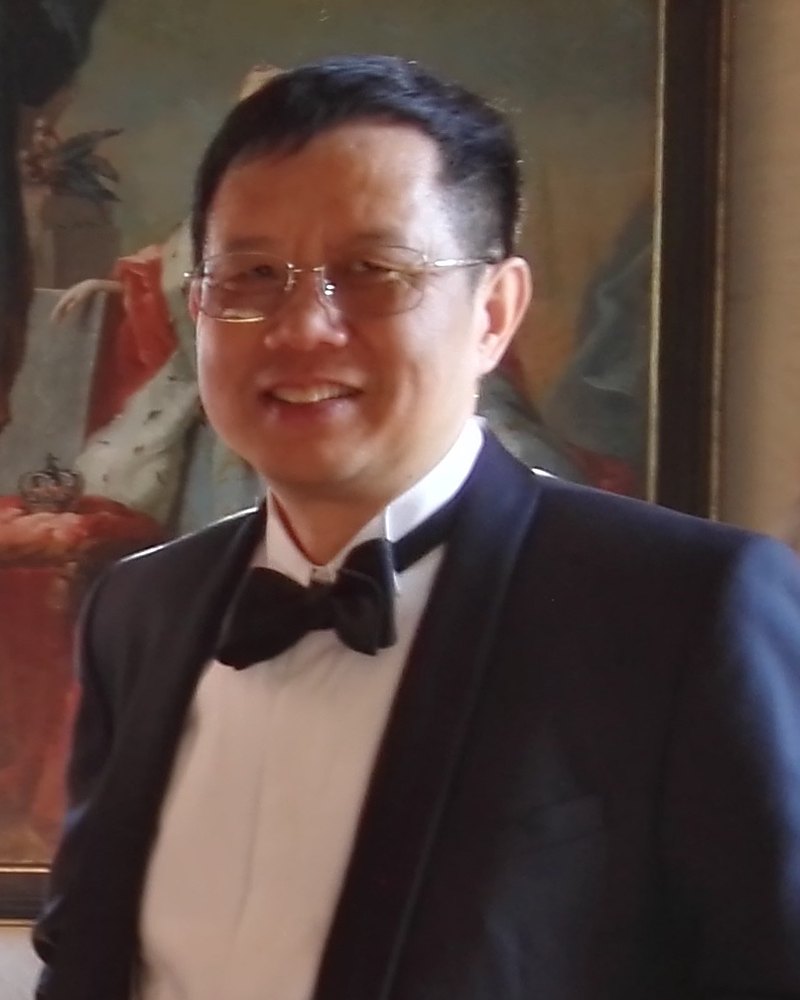
Chief Scientist · NORCE Norwegian Research Centre
Xue-Cheng Tai
I build the mathematics that makes heavy computation fast enough to use — in imaging, simulation and industrial data.
Publications and full profile
Chief Scientist · NORCE Norwegian Research Centre
I build the mathematics that makes heavy computation fast enough to use — in imaging, simulation and industrial data.
Publications and full profile
What I work on
Most industrial questions I see reduce to one of these. If yours looks like any of them, a short conversation is usually enough to tell whether the maths can help.
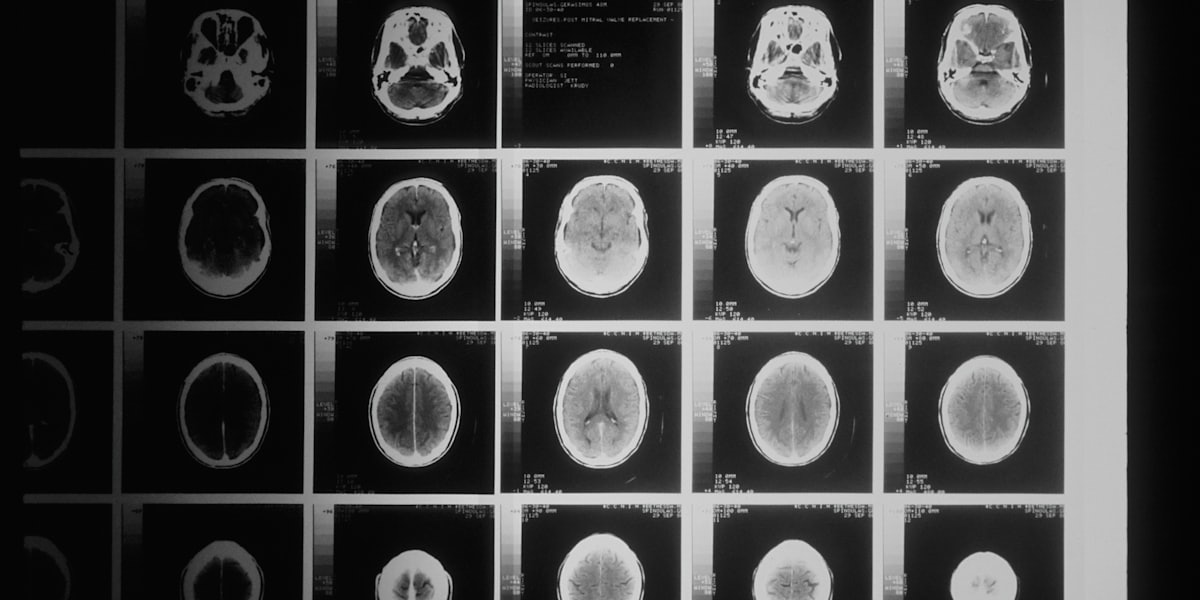
Denoising, sharpening, segmentation and 3D reconstruction of images and scans — including cases with heavy noise, missing data or only a single projection. Methods that mark out an object and measure it reliably, not just make the picture look better.
Medical scans · inspection · microscopy · remote sensing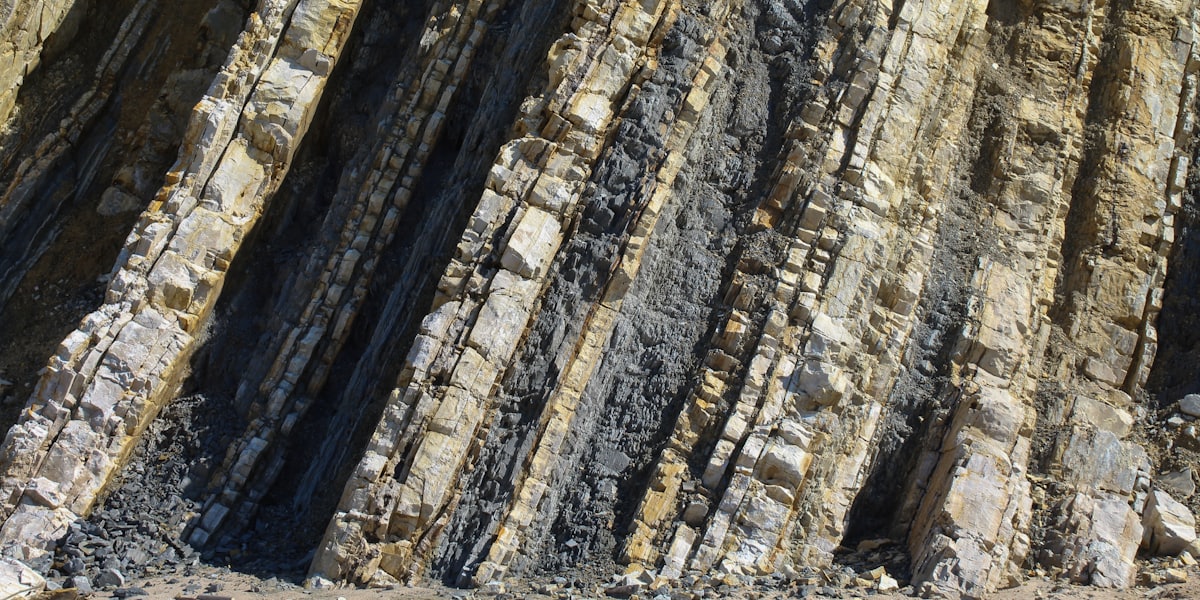
Inverse problems: recovering material properties, sources, permeabilities or geometry from indirect measurements, with methods that hold up when the answer is discontinuous and the data are incomplete.
Subsurface · process monitoring · non-destructive testing
Fast solvers for partial differential equations — splitting, multigrid and domain decomposition — plus physics-informed neural networks used as surrogates when the full simulation is too slow for the decision you need to make.
Flow · furnaces · blood flow · design optimisation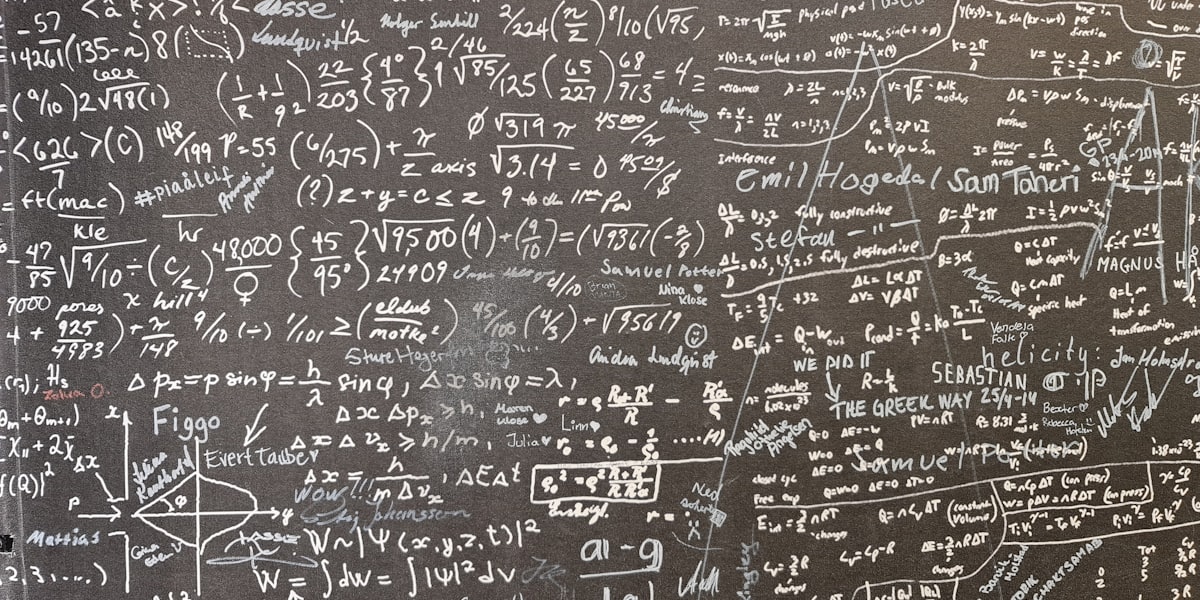
Deep networks that come with a mathematical account of why they work, and where you can build physical constraints and known geometry directly into the architecture. Useful when a black-box model is not acceptable to a regulator or a customer.
Certification · safety-critical AI · scarce training dataTrack record
A co-invented scheme that turns a stiff nonlinear image-processing problem into independent one-dimensional pieces. Fast, stable, easy to parallelise — now standard in PDE-based image processing.
Developed by Stanley Osher (UCLA) and co-authors which is based an earlier method developed by Lysaker_Osher_Tai. One of the most widely used ways to solve total-variation and sparse-recovery problems; the backbone of many practical reconstruction pipelines.
Represents several regions or materials with a single function, which makes multi-phase segmentation and shape identification tractable at industrial scale.
The first algorithm shown to reach the multigrid convergence rate on obstacle-type problems — a guarantee that runtime scales with problem size rather than exploding.
Physics-informed neural solvers for 3D flow in deformable vessels, built with medical-device partners. Removes the meshing step that usually makes patient-specific simulation impractical.
Recent work showing that U-Nets, encoder–decoder networks and transformers can be read as classical numerical methods — which turns architecture design from trial and error into engineering.
What this can do for your business
The approach I am developing now joins classical numerical mathematics with modern machine learning. Models that can be audited, that work on small datasets, and that answer in time for a live decision. That opens problems that were out of reach a few years ago.
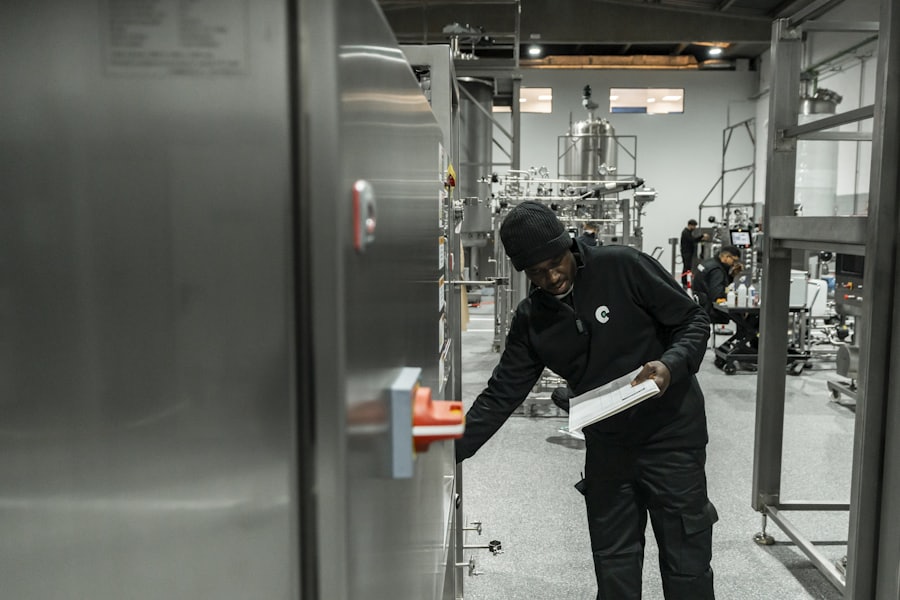 Digital twins that keep pacePhysics-informed models that update from live sensor data — furnaces, reservoirs, pipelines, power systems, patients.
 Inspection without the bottleneckDetect, delineate and measure defects, anomalies or lesions in images, video and scans, with a confidence level rather than a bare label.
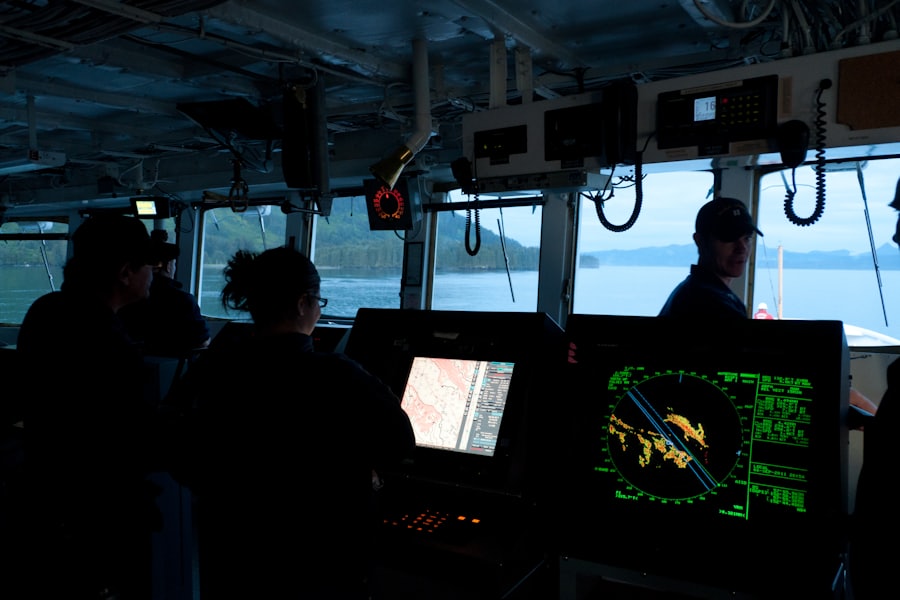 Decisions on incomplete dataRecover what your sensors cannot see directly, and know how far to trust the answer.
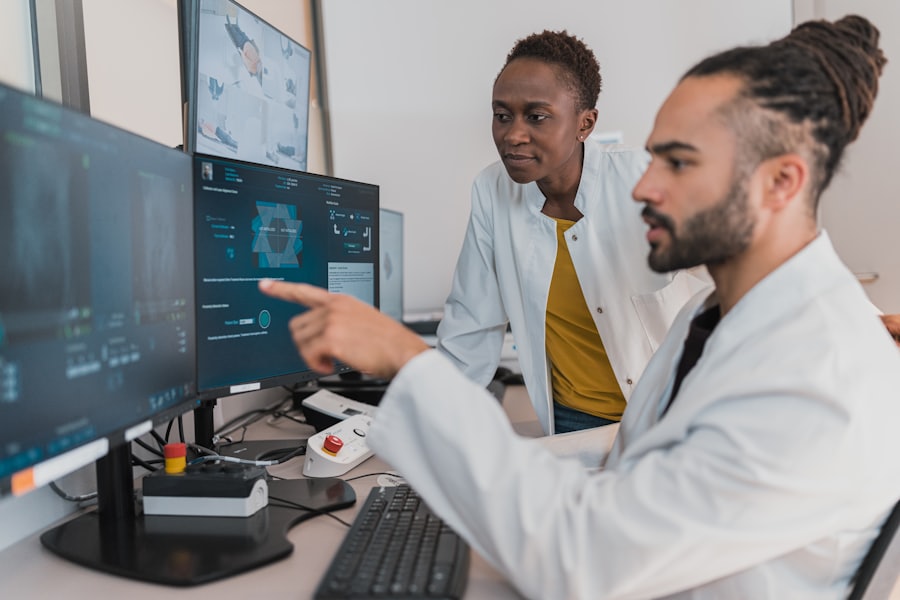 AI you can certifyNetworks with physical and geometric constraints built in, trained on small datasets, explainable to regulators and customers.
 Design at speedSimulation surrogates that let engineers test hundreds of variants in the time one full run used to take.
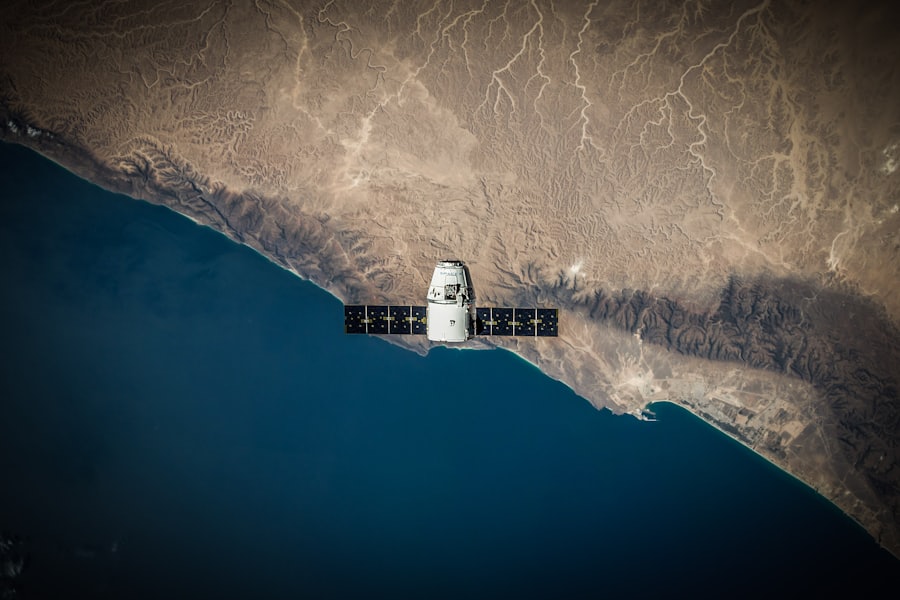 One picture from many sourcesFusion of satellite, drone, AIS and in-situ sensor data for monitoring oceans, energy assets and infrastructure.
So far this has served energy and metals, health, maritime, earth observation and manufacturing. The mathematics does not mind which sector comes next.
Working together
A few weeks on your data to establish whether the problem is solvable and what accuracy is realistic, before you commit a budget.
A defined algorithm or prototype delivered against your specification, with the option of a NORCE team around it.
Industry-partner role in Research Council of Norway, Horizon Europe and other schemes, where public funding carries much of the cost.
Co-supervised PhD or postdoc positions on your problem, and training for your engineers on the methods involved.
Background in numbers
PhD in applied mathematics, University of Jyväskylä (1991). Professor at the University of Bergen (1994–2021), Nanyang Technological University, Singapore (2007–2011), and Chair Professor and Head of Mathematics at Hong Kong Baptist University (2017–2022); Chief Research Scientist and Executive Program Director at COCHE, Hong Kong (2022–2023); Chief Scientist at NORCE since 2023. Feng Kang Prize for Scientific Computing (2009), Nanyang Award for Research Excellence (2011), Humboldt Scholarship (1993). Board member of NOBIM, the Norwegian association for image analysis and machine learning.
Editorial boards — work that keeps me current on what is actually working, well before it reaches textbooks or products: SIAM Journal on Numerical Analysis; SIAM Journal on Imaging Sciences; Journal of Mathematical Imaging and Vision; Inverse Problems and Imaging; East Asian Journal on Applied Mathematics; International Journal of Numerical Analysis and Modeling; Mathematical Foundations of Computing; Frontiers in Computer Science; Computer Methods in Biomechanics and Biomedical Engineering: Imaging & Visualization. Editor in Chief of Advances in Continuous and Discrete Models (2021–2024); Executive Editor of Numerical Mathematics: Theory, Methods and Applications (2005–2021).
Get in touch
A short description of what you measure, what you need to know from it, and how fast you need the answer is enough for me to say whether this is worth pursuing — and to be honest with you if it is not.